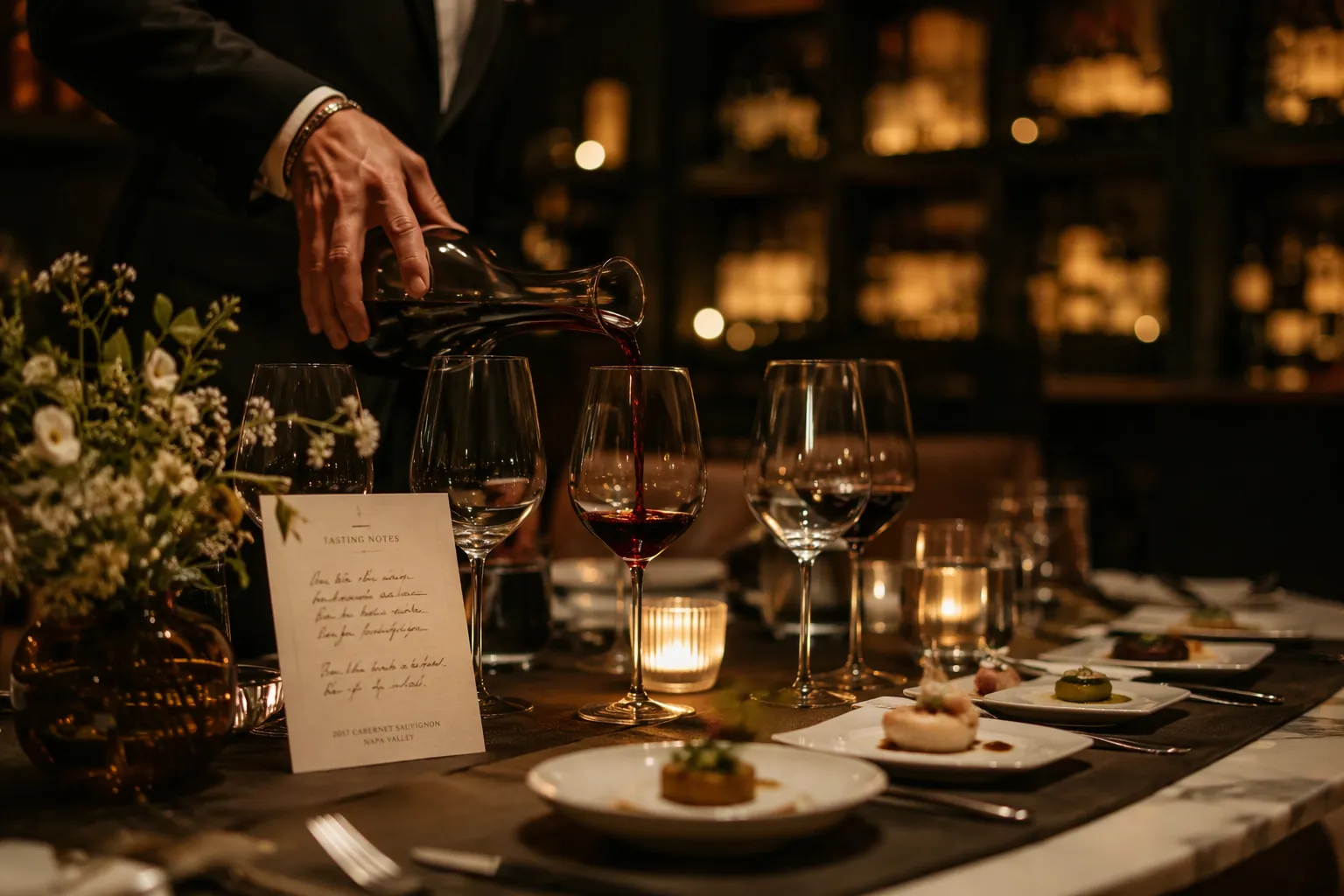
- Real prices: S$68–338++ in Singapore; THB 2,500++ and up for a Bangkok tasting menu pairing.
- What you're buying: curation and access, not volume: total pours ≈ half a bottle.
- Worth it: visiting winemakers, verticals, premium houses flown in.
- Skip it: when the "pairing" is the house pour at a markup. Ask what's in the glass before you book.
The wine pairing dinner is the hotel world's most elegant upsell, and, done right, one of its best priced evenings. The same format can be a masterclass with a Burgundy legend at the table or six glasses of the house red with a microphone. Here's how to tell them apart before you pay.
Course 01The three formats
The winemaker dinner is the headline act: a winery's owner, winemaker or ambassador flies in, the chef builds a menu around their bottles, and the guest of honour introduces each pour. You hear why the 2019 drank differently, what happened to the vineyard that spring. These are the dinners worth planning around.
The sommelier led pairing is the house version: the hotel's own sommelier matches the cellar to a set menu, no visiting celebrity. Quality varies with the cellar, at a serious hotel it's a superb deal; at a weak one it's the format to skip.
The themed pairing night sits between: a region, a grape, a season (hairy crab season, white truffle season) with wines curated for the occasion. Singapore's restaurants run these constantly; they're the most frequent and the most variable.
Course 02The price, anatomised
| Format | Where | Price |
|---|---|---|
| 4-course wine pairing dinner | Singapore restaurant (Botanico) | S$68++ |
| 4-course pairing dinner, mid range | Singapore hotel restaurant | S$88++ |
| 5-course hairy crab feast with curated wines | Singapore (seasonal) | S$338++ |
| Pairing added to a one star tasting menu | Bangkok | THB 2,500++ |
| Pairing at the top tables (2–3 stars) | Bangkok | THB 4,000++ and up |
Now the honest arithmetic. A typical pairing is four to six pours of about 75ml each: roughly half a bottle in total. At S$88++, if the wines retail around S$50 a bottle, the raw liquid costs the house maybe S$25. What you're buying is the other S$50: the sommelier's selection and time, the chef's matched menu, the small room service, and, at the good ones, bottles you couldn't buy by the glass anywhere else. That's a fair deal when the pours are interesting, and a poor one when they're the by the glass list with a microphone.
Course 03How the pairing is built
Worth knowing, because it makes you a better guest: the menu and the wines are matched in a tasting weeks ahead, with the chef and sommelier adjusting both sides. A sauce sharpened to meet a high acid white, a pour swapped when the reduction overwhelms it.
The classic logic runs light to heavy (sparkling or white with the starters, reds building through the mains, something sweet with dessert), but the best pairings break the rules on purpose: an off dry Riesling against a spicy Thai course, an oxidative sherry with mushroom. When a sommelier explains a pairing and it sounds wrong, try it anyway. That glass is often the one everyone talks about on the way home.
Course 04Being a good guest
- You don't have to finish a glass. Six pours at 75ml is half a bottle; professionals taste and move on. Leaving wine is not an insult. It's pacing.
- Eat the course with its wine. The pairing is engineered as a mouthful, not a sequence. Sip, bite, sip again.
- Flag dietary needs at booking. Pairing menus are fixed; the kitchen can adjust with notice, not on the night.
- Ask questions. Winemaker dinners exist for this. "Why this bottle with this dish?" is the question the host flew in to answer.
- Sort your ride before you sit down. Half a bottle over three hours means you should not be behind the wheel. In Bangkok and Singapore, book a ride home.
Course 05Where to find them
In Singapore, the hunting grounds are the hotel restaurants' events pages and booking platform experience pages, pairing dinners run weekly somewhere on the island, S$68 four course nights up to seasonal feasts at three times that. In Bangkok, pairings live inside the tasting menu tier: every starred counter in our chef's table article offers one from THB 2,500++, and the big hotels' fine dining rooms run visiting winemaker evenings through the year.
Most heavily in the cool season, November to February, when the winemakers themselves escape their winters. Both cities' festivals (see our festival calendar) fold wine dinners into their programmes.
You're not paying for the wine in the glass. You're paying for the thirty bottles that were rejected to put it there.